(574) 406-1764
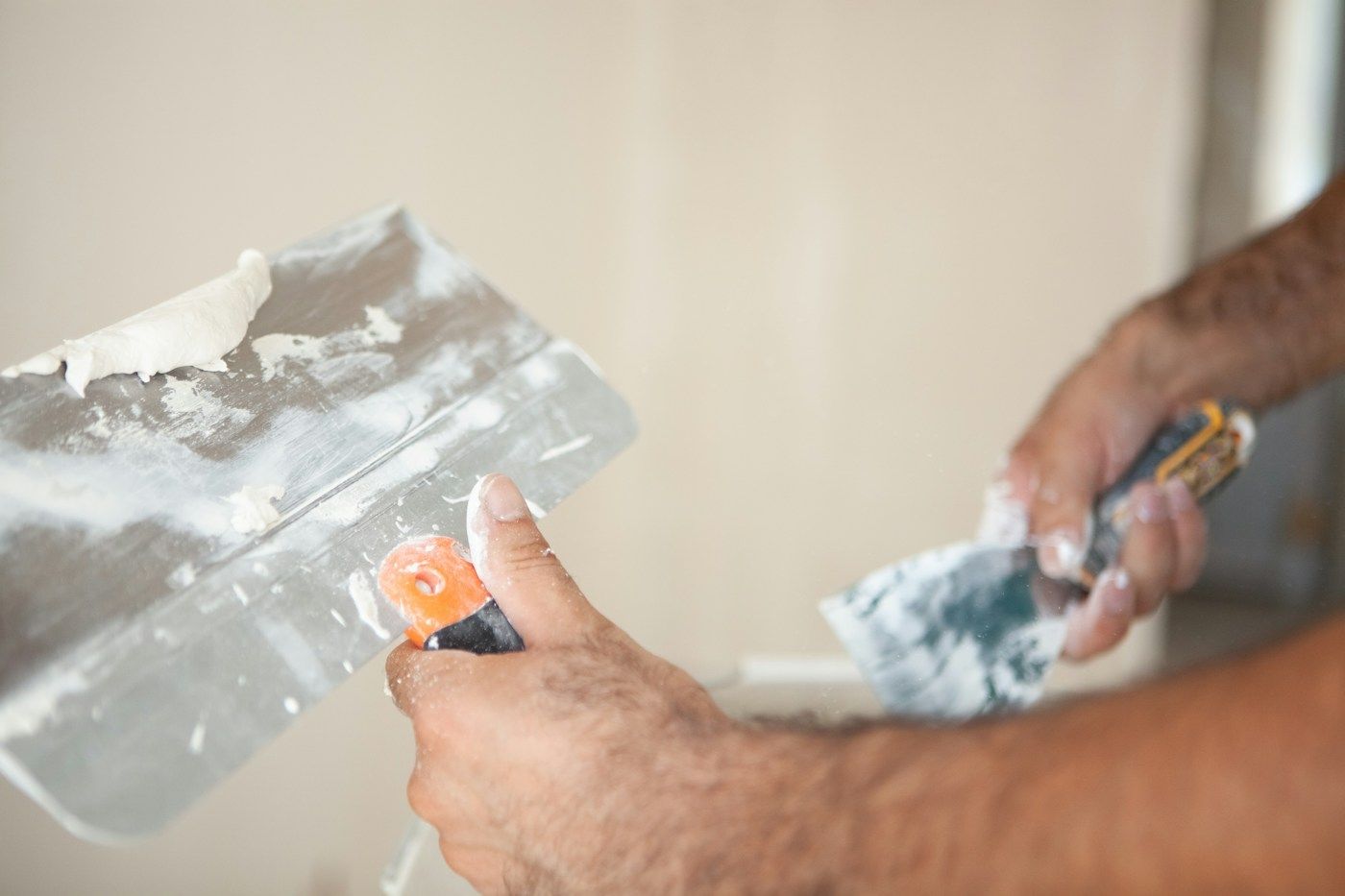
Plasterer smoothing a fresh coat onto a wall with two trowels

South Bend, IN

Plaster Repair in South Bend, IN

South Bend Drywall Pros repairs old plaster on walls and overhead, and converts a room to drywall when the plaster is past saving.

Request a quote

Tell us about the job and we will call you back to talk it through.

Used to answer this request. No newsletters, and we do not pass it on.

Most of the plaster that comes loose is still good. It typically just comes loose from the lath, the little strips of wood behind it, and can be glued back and pinned onto the wood. The cracks can be filled in with a mesh material, and then thin coats of drywall compound can be put on until the wall becomes flat again.

  • Lath type checked before the price
  • Loose plaster pinned back, never just filled
  • Mesh and setting compound over every crack
  • Tear-out priced next to the repair
  • Trim depth measured before board covers plaster

Estimate your plaster job

Typical prices per square foot for South Bend jobs, from the source below. Your quote follows a look at the job.

$564 to $1,212

Call (574) 406-1764 for your price

At a glance

One plaster repair$450 to $545
Tear-out$4.70 to $10.10 per sq ft, removal only
Drywall in its place$2.50 to $3.00 per sq ft to hang
Skim over sound plaster$1.25 to $1.45 per sq ft
Pre-1978 paintPaid work that disturbs it needs an EPA-certified firm
PermitJobs over $500; fees triple if work starts first

Plaster Repair Services

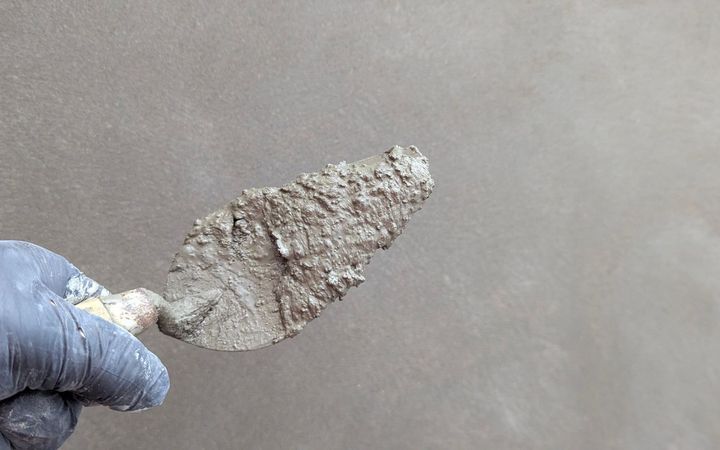
Gloved hand holding a trowel flat against a gray plaster wall

Plaster Crack Repair

A crack in plaster is a symptom. The plaster on each side has come loose from the lath and flexes. Filler pressed into the line alone does not last. We pin both sides back onto the lath first, then cover the crack with fiberglass mesh bedded in setting compound, which hardens more like plaster than premixed mud does.

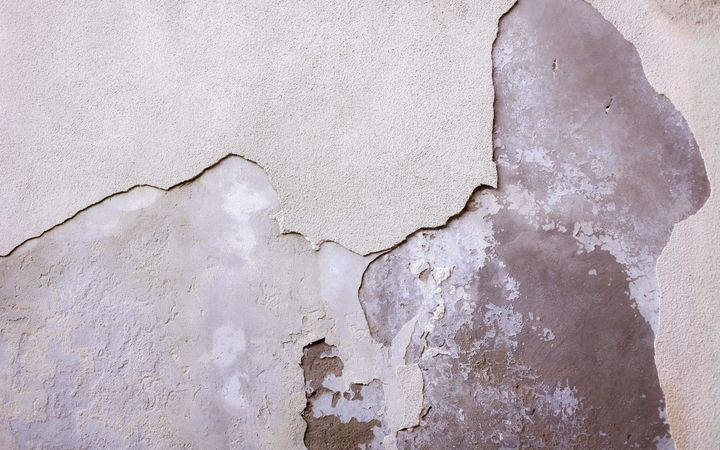
Finish coat of old plaster peeling away from the rough base coat

Reattaching Loose Plaster

Troweled onto wood lath, wet plaster squeezed through the gaps and curled over behind the strips. Those curls are the keys. Decades of settling snap them, and after that the plaster hangs on by paint and habit. We drill through it with a masonry bit, which stalls when it meets wood, and inject adhesive behind. Screws with plastic washers hold the sheet tight against its lath until the glue cures.

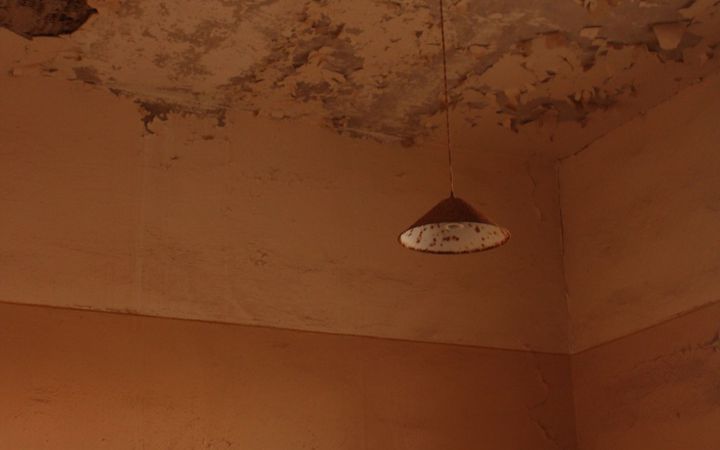
Worn, stained plaster ceiling around an old hanging lamp

Sagging Plaster Ceilings

A plaster ceiling with a belly in it is the one job on this page that should not wait. Once the finish coat parts from the base coat, a whole ceiling can drop in one go. Where the attic floor over it can be reached, thinned bonding adhesive poured from above soaks in and ties the layers back together, which also saves plaster moldings that are costly to copy.

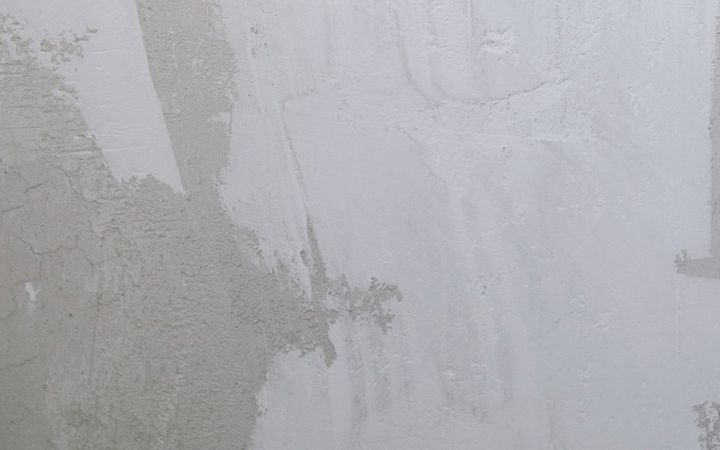
Gray patches of fresh compound drying on a white wall

Skim Coating Old Plaster

Sound plaster that is rough or scarred by old patches gets a thin coat over the entire plane. It hides the washer rows and keeps the solid wall in place. We rate it the best money spent on an old wall. Loose areas get pinned first. A skim coat laid over plaster that still moves just cracks along with it.

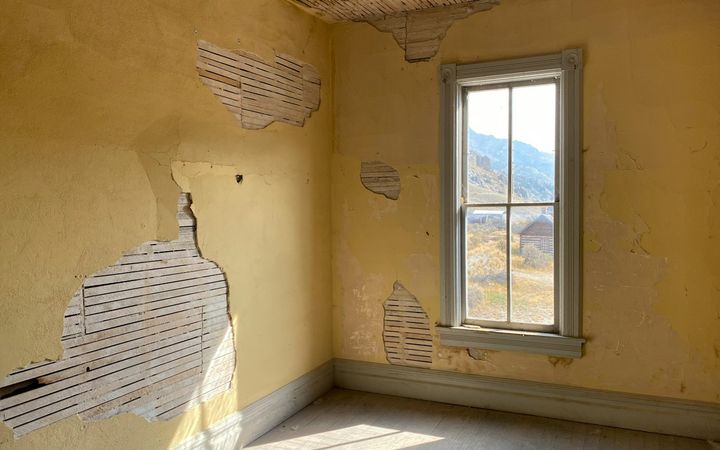
Empty old room with plaster broken away to the wood lath

Plaster to Drywall Conversion

Some plaster is done. Lath split along the studs, or a room being opened for new wiring anyway, and it comes out down to the framing, lath included. Fresh board replaces it, taped and finished. New board is thinner than plaster and lath together, so furring strips on the studs bring it out to the old face before it is hung.

More Plaster Work

Holes and Missing Chunks

Where a piece has fallen out, the edges get pinned so the hole stops growing. Shallow gaps fill in layers of setting compound. Deep ones get a drywall plug, shimmed flush. A doorknob hole through plaster usually means broken lath too, so the opening gets wood backing first.

Plaster Opened for Plumbing or Wiring

Plumbers and electricians cut plaster rough. Closing it is not their job. We square the opening, fill it with board shimmed level with the old face and blend the edges. Under a tub drain, an access panel saves the next plumber from cutting the same hole.

How We Repair Plaster

Plaster fails where it lets go of the lath. A repair that only fills the crack leaves that problem sitting right behind it.

  1. Find out what is behind it. Through the attic hatch or an outlet opening, we check what the plaster sits on. Wood lath and gypsum rock lath take different anchors, and they price differently.
  2. Map what is loose. Press flat-handed along the crack and out from it. Plaster that gives, or sounds hollow under a knuckle, gets a pencil line around it. That line sets the price.
  3. Tent the room. Plastic goes over the furniture and across the doorway before any drilling. Old plaster carries decades of paint, and in a pre-1978 home the federal lead rule governs any paid work that disturbs it.
  4. Pin it back. Holes through the plaster with a masonry bit, which stops when it hits wood. The dust is vacuumed out, a conditioner goes in, then the adhesive. Screws with plastic washers pull the plaster snug against the lath while it cures. Along a ceiling crack they go every 8 to 10 inches along both sides.
  5. Bridge the cracks. Fiberglass mesh over each crack and each washer row, bedded in setting compound. Deep spots fill in layers.
  6. Skim and prime. A thin coat over the repair, or across the full wall where separate patches would show. Primer last, so the new surface takes paint the same way the old one does.

Keep the Plaster or Tear It Out?

Keep it when the base coat is hard and the lath is sound, even with cracks running across the room. Tear it out when the lath itself is broken, or when the room is being opened for wiring anyway. We would say a few cracked walls never justify gutting a sound plaster house. And a hairline that has not moved in years, with nothing around it that gives when pressed, does not need us. Paper tape under a thin coat of joint compound will hold it, and paint hides the rest.

I had a friend I used to help with her home; she lived in an old house down by the beach. All of the walls in the home were lath and plaster. Most of the walls were in pretty good shape, but there always seemed to be some nagging walls in certain rooms that kept cracking, and plaster would fall off. In my opinion, if it was my house and I could not do the repairs myself, I would simply pay someone to keep fixing the loose plaster. Usually the spots that we fixed never came back; it was always new ones.
Old Plaster in South Bend

28.3% of the homes in South Bend were built in 1939 or earlier, against 19.7% in Mishawaka, and six in ten before 1960. Plaster was the wall surface of pretty much every building until the 1930s or 40s.

The plaster was placed over the wood lath, about 3/4 to 7/8 inch thick, which makes the tear-out slow and heavy work. This can create many hours of labor, 16.6 by one estimate, just to strip 120 square feet of plaster and lath, and that’s without any new drywall being hung yet.

All of the houses built in South Bend before 1978 have the federal lead rule (RRP, 40 CFR 745.83) applying to them. Minor repairs would be considered up to six square feet of painted surface in any room. Taking out a whole wall is considered renovation, whatever size that may be. As an example, a crack with holes in it that just needs to be repaired can stay under that rule, but on a tear-out of any kind, the federal rule applies as written, since Indiana has no program of its own.

How Much Does Plaster Repair Cost in South Bend?

One crack or loose patch prices as a single visit. Skim coats and conversions price by the square foot, and the gap between those two is wide.

Plaster Repair Prices

Plaster job 2026 South Bend price Unit
One plaster wall repair $450 to $545 Visit
Skim coat sound plaster $1.25 to $1.45 Sq ft
Strip plaster and lath $4.70 to $10.10 Sq ft
Hang new drywall $2.50 to $3.00 Sq ft
Tape and finish new joints $1.40 to $1.70 Lin ft

Figures are market ranges for basic jobs in zip code 46601, read in September 2026 and rounded. The repair line is a visit because the estimate sets a four-hour labor minimum, and a second loose area on the same day mostly adds material. The removal line covers stripping only. Hanging and taping are the two lines under it.

What moves a plaster quote

  • How far the loose area runs. The estimate counts about three hours of labor for one wall plaster repair. A wall that moves everywhere you press it is a conversion conversation.
  • Ceiling or wall. Overhead work is slower, and a sagging ceiling gets propped before anyone drills into it.
  • Lead work practices. Once a room passes 6 sq ft of disturbed paint, the EPA’s rule adds setup and cleanup time.
  • Jambs and casings on a conversion. New board is thinner than what came off, so trim may need extending or resetting.
  • What goes out the door. Plaster and lath from one room fills a lot of contractor bags, and a whole floor needs a dumpster at the curb.

Get a quote on your plaster repair

Tell us what you are dealing with and we will give you a straight answer on scope, timing and what drives the cost.

Plaster Repair FAQs

How do I tell if my walls are plaster or drywall?

You can take off one of your light switch plates and look at the cut edge of the wall around the box. If it is drywall, it's usually a half inch thick and has a gypsum core, kind of a chalk-looking material. Plaster on wood lath is about 3/4 to 7/8 inch and is a hard material with some wood strips behind it.

Is lath and plaster better than drywall?

Lath and plaster is close to an inch thick and is more durable for things like dents and scratches in the wall. It puts more mass between two rooms, potentially being a little more soundproof. Regular newer drywall is much cheaper to repair with if some of the old walls need it. It doesn't make sense to tear out good lath and plaster just to put new drywall in.

Can I put drywall over my plaster walls?

Yes, you can put drywall over the top of lath and plaster. The screws will have to be a little bit longer to ensure that they go into the studs beneath the plaster and lath. You have to make sure that your trim around your windows and doors sticks out far enough beyond the drywall. Before you commit to the project, make sure that you have more than a half inch of trim sticking out currently.

Is a sagging plaster ceiling dangerous?

If you have lath and plaster on your ceiling and you see it is sagging in an area, this can be dangerous. Sometimes an entire ceiling can come down all at once in the middle of the night. If this is sagging above or near a bed, be sure to keep people off the bed until the problem is fixed. Don't try to push it back up by hand; this can crack and snap the plaster. Instead, use a sheet of plywood and brace it firmly with a few 2x4s.

Does old plaster have asbestos in it?

Simply looking at the plaster does not tell you anything in regard to having asbestos in it or not. The patches that were done years ago are the thing to worry about, as half of the patching compound sold in 1977 contained asbestos. Old plaster walls can carry decades of repairs, and Indiana does not require inspections before renovating any home of four or fewer units. If you are concerned, testing before any tear-out happens is your best bet.

Do I need a permit to replace plaster with drywall in South Bend?

Almost every job is going to require a permit, since the city and county building office wants you to have a permit for any job over $500. If you start a job that will be over $500 without a permit, there could be fees that triple. New Carlisle and Walkerton each have their own building departments. Over the Michigan line, Niles and Buchanan build to the 2015 Michigan Residential Code.

Will the crack come back after a plaster repair?

If the repair was done properly, by being pinned and bridged with mesh, it can hold well and not crack again. Hairline cracks can show up from time to time, especially at the corner of a door frame after a couple of winters, because the framing still moves with the hot and cold seasons. These hairline fractures typically are only as deep as the paint, so a little bit of compound and a touch-up will fix them nicely and easily.

Request a quote

Phone is quicker: (574) 406-1764. Otherwise fill this in. Somebody rings you back.

Used to answer this request. No newsletters, and we do not pass it on.

Call (574) 406-1764Patch my wall