(574) 406-1764
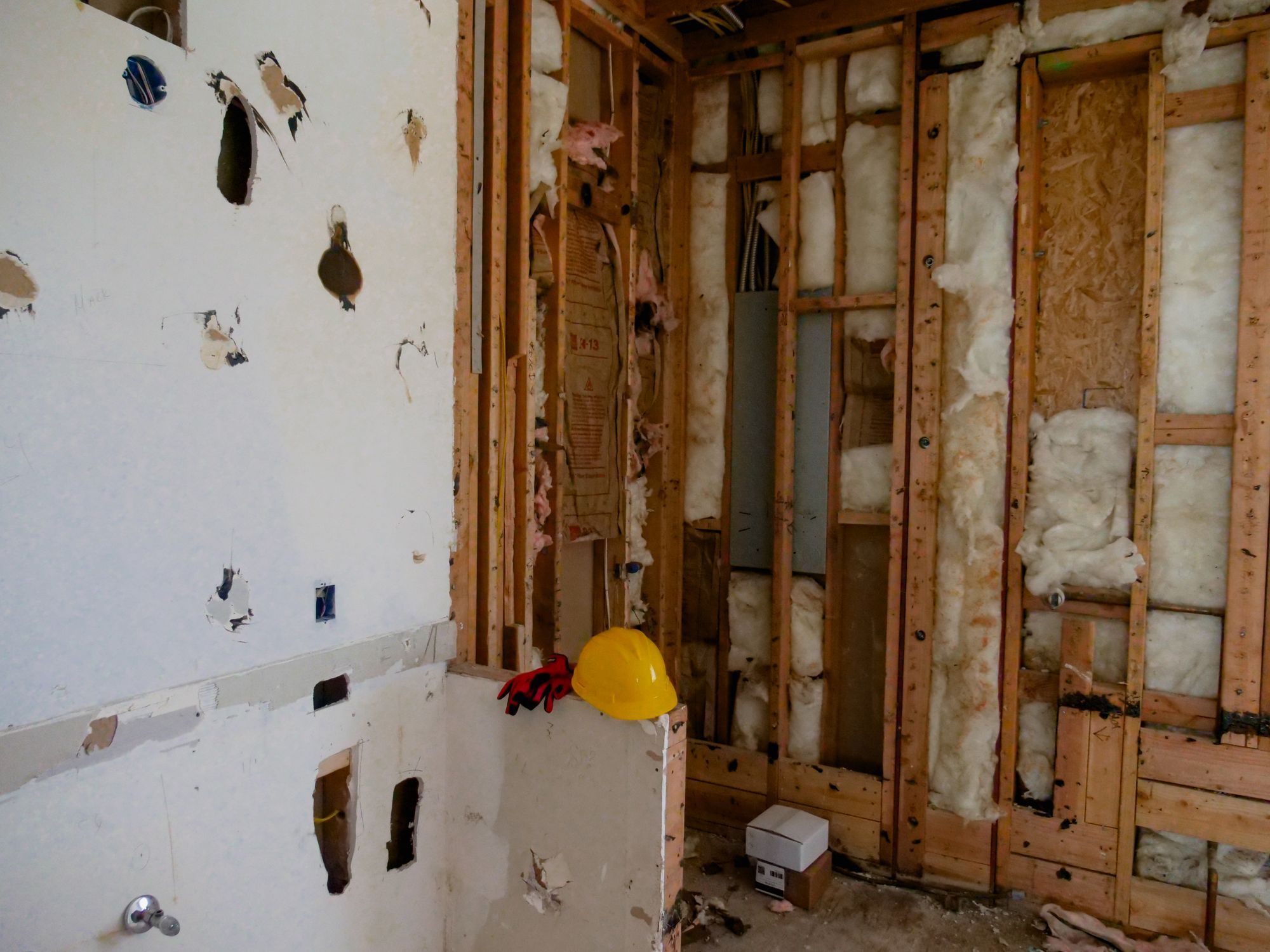
Wall opened down to studs and insulation during a water damage tear-out

South Bend, IN

Water Damage Drywall and Ceiling Repair in South Bend, IN

South Bend Drywall Pros repairs water-damaged drywall and ceilings after burst pipes, roof leaks, ice dams, overflowing tubs and basement floods. We trace how far the water wicked with a moisture meter, cut out soaked board and wet insulation, dry the wall cavity, then hang new drywall and match the surrounding texture until the repair disappears into the room.

Request a quote

Tell us about the job and we will call you back to talk it through.

Used to answer this request. No newsletters, and we do not pass it on.

Water damage in the ceiling can be pretty common, especially in older homes. The typical brown stain that you see can travel quite a ways into the sheetrock. The way to treat this is critical, so that you don't have any kind of mold growing later down the road because it wasn't fixed properly and in the right order.

  • Moisture readings before any wall is closed
  • Wet insulation pulled and replaced
  • Stain-blocking primer before paint
  • Texture matched to the existing ceiling
  • Photos and written scope for your adjuster

Estimate your water damage repair

Typical prices per square foot for South Bend jobs, from the source below. Your quote follows a look at the job.

$179 to $218

Call (574) 406-1764 for your price

At a glance

Small water patch$440 to $535 a visit, cut-out to 16 by 16 in.
New board$5.60 to $6.80 per sq ft
Structure repair too$23 to $42 per sq ft
Mold clockDry everything within 48 hours
Floodwater cutsUnder 2½ ft of water, remove to 4 ft; higher, to 8 ft or the ceiling
Who paysHome policies usually cover a sudden pipe burst; slow leaks and flood need other cover

Water Damage Drywall Repair Services

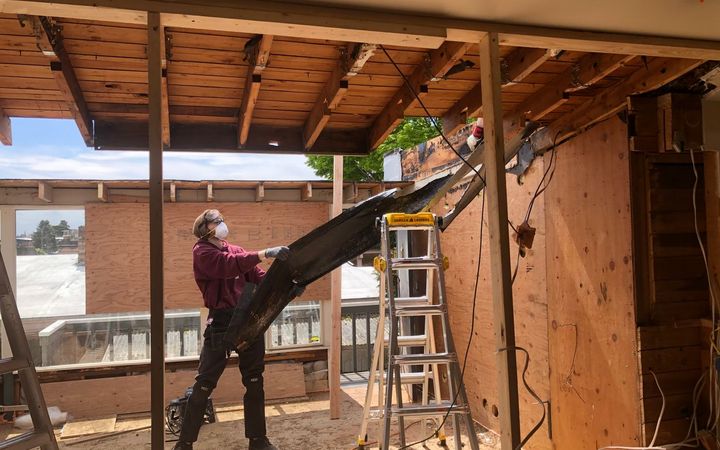
Worker in a respirator pulling down damaged ceiling boards

Water Damaged Ceiling Repair

A leak from a roof or an upstairs bathroom pools on top of the ceiling board until it stains, softens and starts to sag. We cut back to dry, solid board, block between the joists so the new edges have something to fasten to, and hang 5/8-inch drywall, which spans the joists without drooping the way 1/2-inch can.

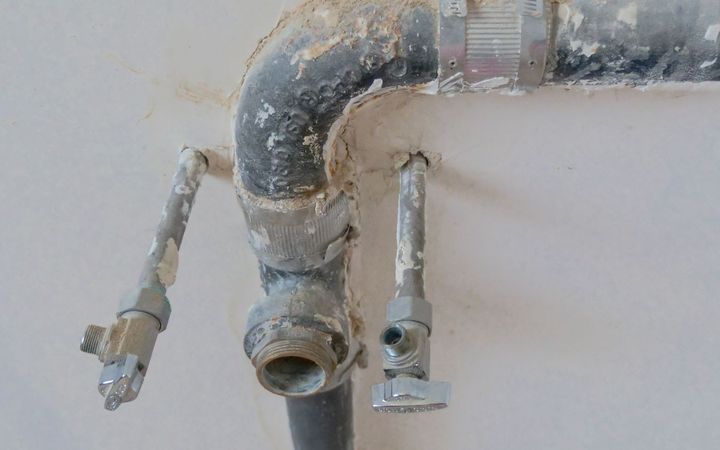
Old supply pipes and shutoff valves on a water-stained wall

Burst Pipe and Plumbing Leak Drywall Repair

Supply lines in exterior walls freeze in a hard cold snap, and the wall behind a kitchen sink or washer takes years of small drips. We open the wall wide enough for the plumber to work, then check the bottom plate and studs before any fresh board goes up, since wood that stays wet behind fresh drywall rots quietly.

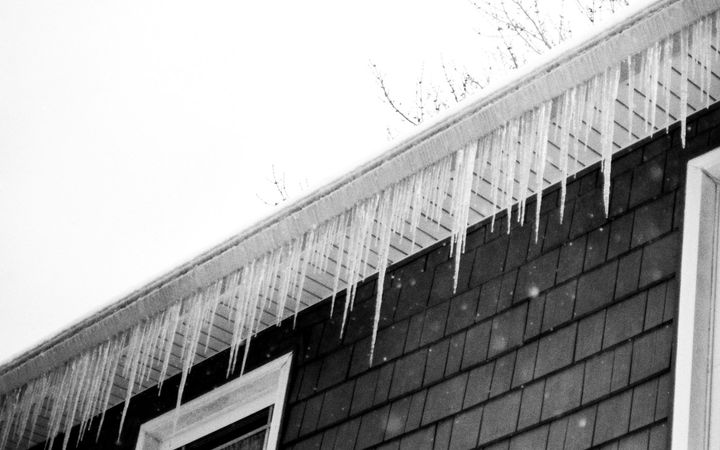
Icicles hanging along the eave of a shingled house

Ice Dam Water Damage Repair

South Bend's normal snowfall is 64.5 inches a year. Heat escaping through the attic melts that snow, it refreezes at the eaves, and meltwater backs up under the shingles. It shows up as stains where exterior walls meet the ceiling. The roof or attic problem gets fixed first, then we replace the wet board and insulation.

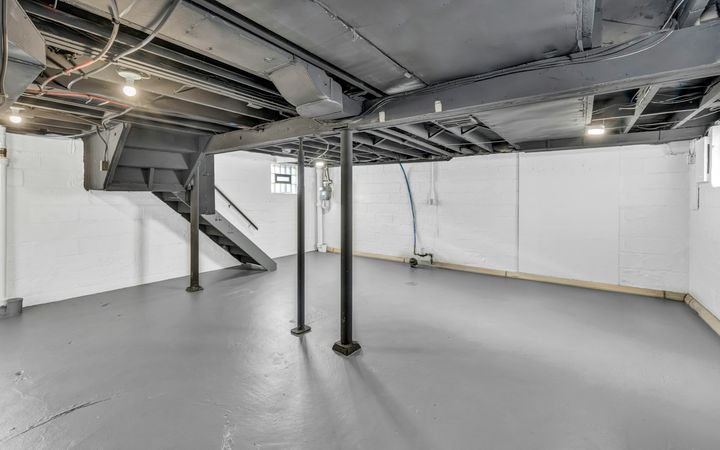
Unfinished basement with bare walls, steel posts and open joists

Basement Flood Drywall Repair

A failed sump pump, a seeping foundation wall or a river over its banks leaves basement drywall soaked from the floor up. That water counts as dirty, so the wet board comes out instead of drying in place. FEMA's guidance is a cut to 4 feet when the water stood under 2 1/2 feet, which lets full sheets go back in, and 8 feet or the ceiling above that.

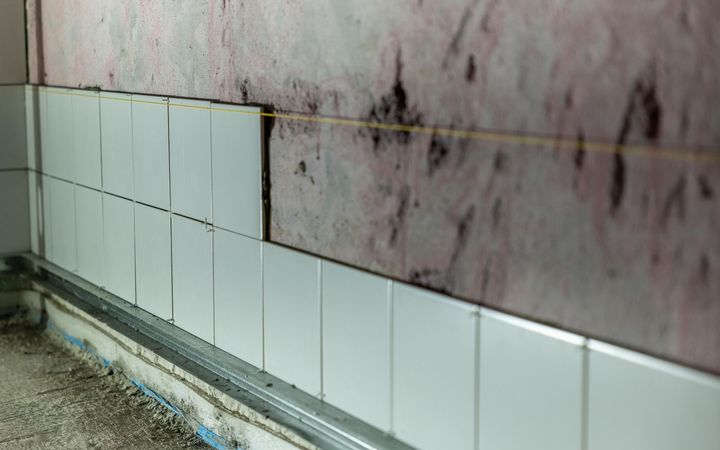
Tile wall with water stains and mold above the tile line

Bathroom and Shower Leak Drywall Repair

Cracked grout, a failed shower valve or a toilet leaking at the wax ring soaks the wall behind the tile or the ceiling below. We rebuild with moisture-resistant board, and with cement board behind any tile that will get wet, since green board is made for humid rooms, not for direct contact with water.

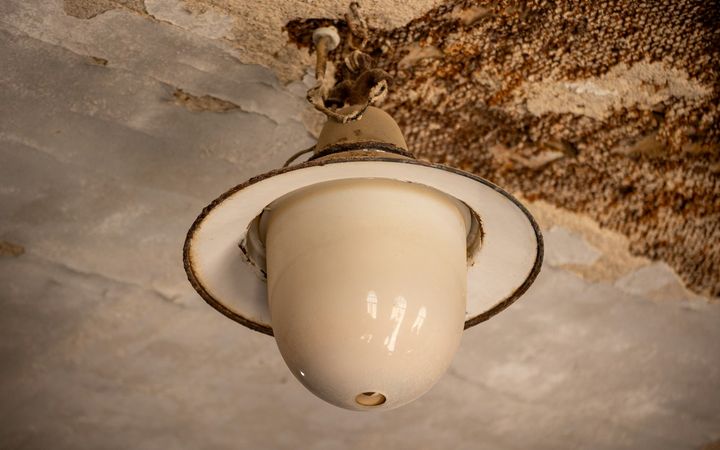
Water-stained, peeling ceiling around an old light fixture

Water Stained Ceiling Repair

A stain on board that is dry and still firm does not always mean new drywall. Latex paint alone lets the stain bleed through within days, so it gets a shellac or oil-based stain-blocking primer first. A stain that keeps growing means water is still getting in, and painting over it only hides the evidence.

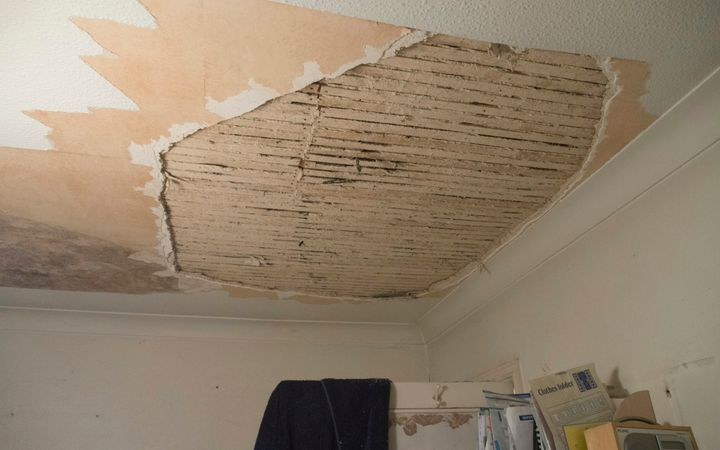
Water-stained plaster ceiling fallen away to expose the wood lath

Plaster Ceiling Water Damage

In a pre-1940 house the wet ceiling is often plaster on wood lath. Water swells the lath and breaks the plaster keys, so the ceiling starts to belly downward. Sound sections can be re-anchored with plaster washers and skim-coated. Where it has let go, we take it down and hang drywall.

Black mold streaks on a white painted wall

Mold-Damaged Drywall Removal

Board that stayed wet for days can grow mold inside the wall before any shows through the paint, so we open a suspect wall and look behind it before deciding what stays. Doing it yourself stops at about 10 square feet. Past that, the job goes to a contractor with mold experience who follows a remediation guide. That guide seals off the larger work areas and bags the removed board on the way out.

How Water Damaged Drywall Gets Repaired

The order matters more than the patch. Close a wall over wet framing and the repair fails from behind, usually as mold or a nail pop line a few months later.

I have had water damage to my ceiling a couple of times. A leaky pipe created a brown stain about 6 feet in diameter. It was a house I was renting, and it took the owners a couple of days to get someone out. We ended up having mold issues, and because they closed up the hole too soon, they had to tear it out again and we had to move out. The second time, I opened up the sheetrock myself, got rid of all the moist material and rented big fans to dry the area.

  1. Stop the water. A plumber or roofer fixes the source first. We can open the drywall so they can reach it.
  2. Map the moisture. A meter shows how far the water wicked, which is nearly always beyond the stain’s edge. Readings are compared against a dry wall elsewhere in the house.
  3. Cut out what cannot be saved. Swollen or soft board, anything sewage or floodwater touched, and any ceiling that sags.
  4. Dry the cavity. Fans and a dehumidifier run until studs and plates read dry. Wet insulation is bagged and replaced.
  5. Rebuild. New board goes up, moisture-resistant where the room calls for it and 5/8-inch on ceilings.
  6. Finish to match. Tape and three coats, texture sprayed on a test board until it matches, then stain-blocking primer so nothing bleeds through the paint.

Dry It in Place or Tear It Out?

EPA cleanup guidance allows drywall wet by clean water to be dried in place when there is no obvious swelling and the seams are intact, with the wall cavity ventilated. The IICRC S500 restoration standard goes further for contaminated water. Board soaked by sewage or floodwater is removed, never dried. Anything wet for more than 48 hours gets opened up, because by then the back of the paper is where mold starts.

Older Homes, Lead Paint and Asbestos

A lot of homes in the South Bend area were built prior to 1978, which means there could be lead paint and asbestos materials in the home. If the job requires removing more than 6 square feet of painted surface in any of the rooms, it falls under the EPA’s Renovation, Repair and Painting rule. Any material that is to be torn out, including old mud, texture and drywall, should be tested, and this can cause a few days of delay to start the project.
Water Damage, Drywall and Your Insurance Claim

As a homeowner, filing claims can be tricky if not done right. The key is to have all your ducks in a row before the adjuster comes out.

  • Sudden or gradual. Things like bursting pipes and overflowing tubs should be covered. Ongoing smaller leaks that weren’t paid attention to could fall under homeowner maintenance and not be covered by the insurance company.
  • Flooding is a separate policy. Flooding from outside of the house is a whole other policy and falls under flood insurance.
  • Photograph before tear-out. Always take photos of any leak or damage as soon as you can, and definitely before anything is torn out.
  • Ask for a line-item scope. Be sure to always get a written scope of work; this will help with all your conversations with the adjuster.

How Much Does Water Damage Drywall Repair Cost in South Bend?

A small ceiling stain and a flooded basement sit at opposite ends of the range. Use these figures to size up a quote, not to replace one.

Water Damage Drywall Repair Prices

Water damage job 2026 South Bend price Unit
Ceiling water damage patch $440 to $535 Patch
Tear out, replace wet board $5.60 to $6.80 Sq ft
Re-hang a damaged ceiling $3.05 to $3.70 Sq ft
Tape and finish new joints $1.40 to $1.70 Linear ft
Replace wet wall insulation $1.60 to $2.70 Sq ft
Repaint the ceiling $1.50 to $3.25 Sq ft
Cut out and repair framing $23 to $42 Sq ft

Figures are market numbers for basic, mid-range jobs in zip code 46601, rounded. The patch line covers a ceiling repair up to 16 by 16 inches. Its price is mostly the minimum charge for sending a crew out, so two patches on one visit cost far less than two visits. Drying equipment, mold remediation and the plumbing or roofing repair are separate.

What moves a water damage quote

  • How far the water wicked. Drywall draws water upward and sideways, so more board is wet than the paint shows.
  • Clean or contaminated water. A supply line leak can sometimes be dried. Sewage and floodwater mean full removal and cleaning before anything is rebuilt.
  • What is wet behind the board. Soaked insulation, a rotted bottom plate or a swollen subfloor adds its own line to the scope.
  • Ceiling height and texture. A vaulted ceiling needs staging, and a knockdown or hand texture takes sample boards to match.

Get a quote on your water damage drywall repair

Tell us what you are dealing with and we will give you a straight answer on scope, timing and what drives the cost.

Water Damage Drywall Repair in nearby areas

Water Damage Drywall Repair FAQs

How long does wet drywall take to dry out?

If your drywall board was not too wet, it can take a few days to dry. If the leak was down near the bottom plate of the wall, it can take a lot longer. The only real way to know if your drywall is fully dry is not how much time it took but what the moisture meter reads.

My ceiling is bulging with water. What should I do right now?

Shut off the water, and make sure everyone stays out of the way in case it breaks: the material can come down fast and hurt someone. Because water and electricity don't mix well, turn off the power. If it feels safe, have a large bucket and jab a hole in the lowest point to let it start draining.

Do I need a water restoration company before you come in?

Most leaks that are caught early usually do not need a restoration company. If there is flooding, a sewage backup or standing water in any of the rooms, a mitigation company is usually needed to pump the water out and run commercial drying equipment before any rebuilding starts. Their drying log will help with any claims.

Will you talk to my insurance adjuster?

If the damage from a leak is significant enough and you want to file an insurance claim, we can help with this process. All the before and after photos and a written document of the work can be sent to the adjuster, which will greatly help. Your insurance company will determine how much your policy pays for the repairs.

Will the repaired ceiling match the rest of the room?

Depending on the type of texture, it can usually be matched pretty well. If the paint is older and faded, it can be hard to make an exact match. Sometimes the only real way to make the ceiling look all the same is to repaint the whole ceiling, and the price should be talked about before the job is started.

Will the new drywall sit flush with my old walls?

A good drywall contractor always has ways to make repairs flush with the rest of the existing walls. Existing walls can have various thicknesses, from 3/8 inch to an inch thick, so it can be tricky, but it definitely can be done. There are ways of using thin strips of wood to build a wall out to match older walls.

Request a quote

Phone is quicker: (574) 406-1764. Otherwise fill this in. Somebody rings you back.

Used to answer this request. No newsletters, and we do not pass it on.

Call (574) 406-1764Patch my wall